
Pharmacogenomic Testing in LTC Facilities
What is Pharmacogenomic (PGx) testing and how can it benefit LTC communities?
PGx is a rapidly evolving science focused on how an individual’s genes may affect his or her response to medications. While many patients may metabolize a medication appropriately, others may metabolize it too quickly, too slowly, or not well at all.
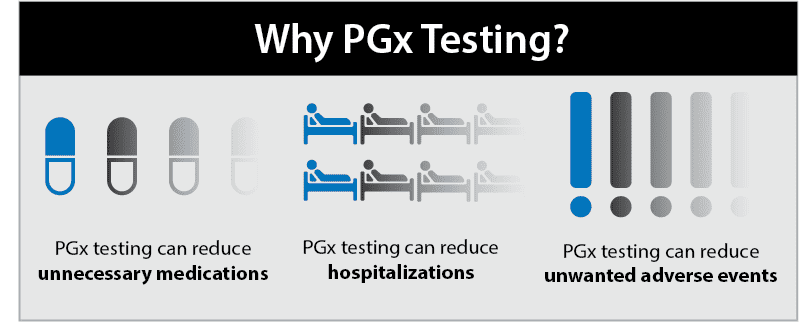
PGx testing identifies genetic variants that indicate potential drug-gene interactions – information providers can use to help guide clinical decision-making and ensure medications in the individual’s treatment plan are providing optimal therapeutic benefit. It can also help avoid unwanted adverse events that may result from errant medication metabolism.

HealthDirect has partnered with a leading PGx provider, AccessDx Laboratory, to help facilitate access to precision medicine analysis via PGx for our partner communities.
When should I consider PGx testing for my community?
Per CMS, PGx tests are indicated when medications are being considered for use, or already being administered, that are medically necessary, appropriate, and approved for use in the patient’s condition and are known to have a gene(s)-drug interaction that has been demonstrated to be clinically actionable as defined by the FDA or Clinical Pharmacogenetic Implementation Consortium (CPIC) guidelines category A and B. For additional information, see FDA Table of Pharmacogenetic Associations and CPIC Guidelines. Put another way, when medications are being prescribed with established potential for drug-gene interactions that can impact treatment success, PGx testing should be considered by clinical decision-makers to help guide therapy.
How do HealthDirect & AccessDx Laboratory deliver actionable PGx testing results?
Using validated gene-drug interaction data to create an individualized risk assessment, you will receive a comprehensive report for each patient detailing any anomalies to their genetic profile that may impact medications that are currently prescribed. Samples are obtained on site from a quick buccal swab.
AccessDx Laboratory analyzes a comprehensive set of genes based on the most recent evidenced-based data from internationally recognized PGx research organizations such as CPIC, the FDA, PharmGKB, and KNMP.
This drug-gene interaction panel provides analysis on over 200 medications across 16+ therapeutic areas, some examples are highlighted in the tables below, many of these medications are common therapies we see in everyday practice.
Antidepressants
| Antidepressants | |
|---|---|
| Medication | Gene(s) |
| Amitriptyline (Elavil®) | CYP2D6, CYP2C19 |
| Bupropion (Wellbutrin®, Contrave®) | CYP2B6, ANKK1 |
| Citalopram (Celexa®) | CYP2C19, SLC6A4, GRIK4, FKBP5, HTR2A |
| Clomipramine (Anafranil®) | CYP2D6, CYP2C19 |
| Desvenla-faxine (Pristiq®) | CYP2D6 |
| Doxepin (Silenor®) | CYP2D6, CYP2C19 |
| Escitalopram (Lexapro®) | CYP2C19, SLC6A4 |
| Fluoxetine (Prozac®, Sarafem®) | CYP2D6 |
| Fluvoxamine (Luvox®) | CYP2D6, SLC6A4 |
| Imipramine (Tofranil®) | CYP2D6, CYP2C19 |
| Nefazodone (Serzone®) | CYP2D6 |
| Nortriptyline (Pamelor®) | CYP2D6 |
| Paroxetine (Paxil®, Brisdelle®) | CYP2D6 |
| Sertraline (Zoloft®) | CYP2C19 |
| Venlafaxine (Effexor®) | CYP2D6 |
| Vortioxetine (Trintellix®) | CYP2D6 |
| Neurology | |
|---|---|
| Medication | Gene(s) |
| Brivaracetam (Briviact®) | CYP2C19 |
| Clobazam (Onfi®) | CYP2C19 |
| Diazepam (Valium) | CYP2C19 |
| Dronabinol (Marinol®) | CYP2C9 |
| Lorazepam (Ativan®) | UGT2B15 |
| Oxazepam (Serax®) | UGT2B15 |
| Phenobarbital (Luminal®) | CYP2C19 |
| Phenytoin (Dilantin®) | CYP2C9 |
| Primidone (Mysoline®) | CYP2C19 |
| Zonisamide (Zonegran®) | CYP2C19 |
| Dextromethorphan / Quinidine (Nuedexta®) | CYP2D6 |
| Donepezil (Aricept®) | CYP2D6 |
| Galantamine (Razadyne®) | CYP2D6 |
| Deutetrabenazine (Austedo®) | CYP2D6 |
| Tetrabenazine (Xenazine®) | CYP2D6 |
| Valbenazine (Ingrezza®) | CYP2D6 |
| Cardiovascular | |
|---|---|
| Medication | Gene(s) |
| Atorvastatin (Lipitor®) | SLCO1B1, CYP3A4 |
| Fluvastatin (Lescol®) | CYP2C9, SLCO1B1 |
| Lovastatin (Mevacor®, Advicor®) | CYP3A4, SLCO1B1 |
| Pitavastatin (Livalo®) | SLCO1B1 |
| Pravastatin (Pravachol®) | SLCO1B1 |
| Rosuvastatin (Crestor®) | SLCO1B1, ABCG2 |
| Simvastatin (Zocor®) | SLCO1B1, CYP3A4 |
| Carvedilol (Coreg®) | CYP2D6 |
| Irbesartan (Avapro®) | CYP2C9 |
| Losartan (Cozaar®, Hyzaar®) | CYP2C9 |
| Metoprolol (Lopressor®) | CYP2D6 |
| Nebivolol (Bystolic®) | CYP2D6 |
| Propranolol (Inderal®) | CYP2D6 |
| Timolol (Timoptic®) | CYP2D6 |
| Clopidogrel (Plavix®) | CYP2C19 |
| Ranolazine (Ranexa®) | CYP2D6 |
| Warfarin (Coumadin®) | CYP2C9, VKORC1, CYP4F2, CYP2C |
| ADHD | |
|---|---|
| Medication | Gene(s) |
| Amphetamine (Adderall®, Evekeo®) | COMT, CYP2D6 |
| Atomoxetine (Straterra®) | CYP2D6 |
| Dexmethylphenidate (Focalin®) | COMT, ADRA2A |
| Dextroamphetamine (Dexedrine®) | COMT, CYP2D6 |
| Methylphenidate (Ritalin®, Concerta®) | COMT, ADRA2A |
| Antipsychotics | |
|---|---|
| Medication | Gene(s) |
| Aripiprazole (Abilify®, Aristada®) | CYP2D6 |
| Brexpiprazole (Rexulti®) | CYP2D6 |
| Chlorpromazine (Thorazine®) | CYP2D6 |
| Clozapine (Clozaril®) | CYP1A2, CYP2D6, HTR2C |
| Haloperidol (Haldol®) | CYP2D6 |
| Iloperidone (Fanapt®) | CYP2D6 |
| Olanzapine (Zyprexa®) | CYP1A2, HTR2C |
| Paliperidone (Invega®) | CYP2D6 |
| Perphenazine (Trilafon®) | CYP2D6 |
| Risperidone (Risperdal®) | CYP2D6, HTR2C, DRD2 |
| Thioridazine (Mellaril®) | CYP2D6 |
| Analgesics | |
|---|---|
| Medication | Gene(s) |
| Celecoxib (Celebrex®) | CYP2C9 |
| Codeine (Codeine; Tussin AC®) | CYP2D6 |
| Fentanyl (Actiq®) | OPRM1 |
| Hydrocodone (Vicodin®) | CYP2D6, OPRM1 |
| Ibuprofen (Advil®, Motrin®) | CYP2C9 |
| Meloxicam (Mobic®) | CYP2C9 |
| Methadone (Dolophine®) | CYP2B6 |
| Morphine (MS Contin®) | OPRM1, COMT |
| Oxycodone (Percocet®, Oxycontin®) | CYP2D6 |
| Piroxicam (Feldene®) | CYP2C9 |
| Tramadol (Ultram®) | CYP2D6 |
| Proton Pump Inhibitor (PPI) | |
|---|---|
| Medication | Gene(s) |
| Dexlansoprazole (Dexilant®, Kapidex®) | CYP2C19 |
| Esomeprazole (Nexium®) | CYP2C19 |
| Lansoprazole (Prevacid®) | CYP2C19 |
| Omeprazole (Prilosec®) | CYP2C19 |
| Pantoprazole (Protonix®) | CYP2C19 |
| Rabeprazole (Aciphex®) | CYP2C19 |
| Central Nervous System | |
|---|---|
| Medication | Gene(s) |
| Meclizine (Antivert®) | CYP2D6 |
| Metoclopramide (Reglan®) | CYP2D6 |
| Naltrexone (Vivitrol®, Contrave®) | OPRM1 |
| Ondansetron (Zofran®, Zuplenz®) | CYP2D6, ABCB1, SLC6A4 |
| Urology | |
|---|---|
| Medication | Gene(s) |
| Fesoterodine (Toviaz®) | CYP2D6 |
| Mirabegron (Myrbetriq®) | CYP2D6 |
| Tamsulosin (Flomax®) | CYP2D6 |
| Tolterodine (Detrol®) | CYP2D6 |
| Torsemide (Demadex®) | CYP2C9 |
*Not a complete list. For additional details on the medications and genotypes analyzed please contact your HealthDirect or AccessDx Laboratory representative.
How to access pharmacogenomic (PGx) testing for your community
- Ask your HealthDirect representative for more information on PGx opportunities and next steps. HealthDirect will coordinate with AccessDx Laboratory to run a free risk assessment report for your community.
- Following a review of your community’s risk assessment results, an AccessDx Laboratory representative will schedule a time to collect the buccal swab specimens from your residents.
- Comprehensive PGx analysis results for tested residents will be received within a week of laboratory receipt and will be reviewed with any clinical staff that wish to be involved.
What is the cost of this service to my residents and community?
PGx testing is covered by Medicare and other major payors when medically necessary. PGx testing is also covered by most commercial insurance providers with a copay. HealthDirect has secured a discounted rate of $249 for any uninsured individuals that have a medical need for PGx testing. Contact your HealthDirect or AccessDx Laboratory representative for any questions on coverage determination.
AccessDx Laboratory delivers evidence-based and best-in-class advanced molecular diagnostic testing solutions to enable precision medicine programs nationwide. With the expertise of our multidisciplinary team of senior care and precision medicine experts and best-in-class partners like HealthDirect, AccessDx seamlessly integrates personalized diagnostics, evidence-based medicine, risk mitigation tools, and EHR-based clinical decision support to reduce readmissions, ED visits, falls, and polypharmacy.