
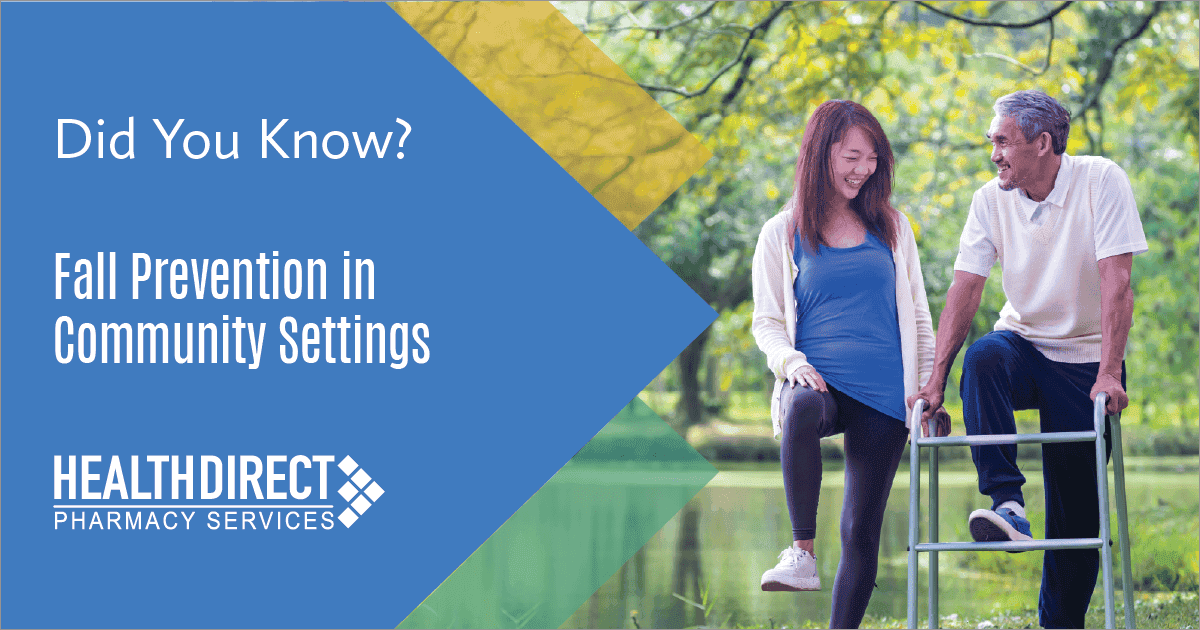
About PALTmed’s Clinical Practice Guideline on
Falls and Fall Prevention
Falls are ever-present in the post-acute and long-term care continuum, and PALTmed’s newly revised Clinical Practice Guideline on Falls and Fall Prevention in the Post-Acute and Long-Term Care Setting provides clinicians and community leaders with a practical, evidence-informed, and implementable resource tailored to the specific challenges of PALTC settings. [published April 2026 in JAMDA]
Developed by an interdisciplinary workgroup of clinicians, certified medical directors, nursing home administrators, and national PALTC leaders, the revision reflects a comprehensive review of relevant journal articles, books, and grey literature with an understanding that there is a relative lack of robust randomized control trials conducted on falls in PALTC settings.
The Post-Acute and Long-Term Care Medical Association (PALTmed) is the national professional association representing medical directors, physicians, nurse clinicians, physician assistants, and others practicing in the post-acute and long-term care (PALTC) continuum.
Scope of the Problem in the PALTC Setting
Falls are a significant cause of injury, disability, and death in older adults, especially those who are frail. A systematic review published in JAMDA in 2023 found that the incidence of falls in skilled nursing communities is 121 per 100 person-years.
Residents and patients of post-acute and long-term care (PALTC) communities fall for a variety of reasons. Often, both intrinsic factors (age-related changes, acute or chronic conditions, cognitive impairment, inability to understand and follow safety measures, pain, and physical weakness) and extrinsic factors (the patient’s environment or activities; medication adverse effects; presence of tethers such as Foley catheters, external catheters, or other tubes or lines; malfunctioning or broken assistive devices) are involved.
In any PALTC setting, preventing falls constitutes a significant challenge and requires interdisciplinary engagement. Efforts should focus on minimizing fall risk and fall-related injuries while maximizing individual dignity, freedom, and quality of life.
This article will summarize key findings and recommendations from PALTmed’s CPG on fall management and fall prevention.
4Ms Framework of Age-Friendly Care to Guide Fall Management and Prevention
The guideline aligns fall prevention with the Age Friendly Health Systems 4Ms Framework, helping teams
stay person centered:
- What Matters: Goals, preferences, dignity, and quality of life
- Medication: Target polypharmacy, anticholinergic burden, and Beers list drugs
- Mentation: Delirium, dementia, depression, and cognitive awareness
- Mobility: Gait, balance, strength, transfers, and assistive devices
Using the 4Ms helps teams balance safety with independence, rather than focusing on fall prevention alone.
Recognition and Assessment of Fall Risk
– Does the Patient Have a History of Falls?
For a newly admitted patient, assess functional history, including whether the individual ambulates independently, with an assistive device, or not at all, and whether the person has had 2 or more falls in the past year. A history of prior falls is the strongest predictor of future falls.
Address the potential for further falling in the patient’s care plan, either separately or in conjunction with care plans related to other risk factors associated with increased fall risk.
– Is the Patient at Risk of Falling?
Assess all patients for fall risk. Fall assessments (including pre-fall risk assessment and post-fall assessment) are both multifactorial and interdisciplinary and require reviewing each patient’s circumstances, with consideration to their functional ability, surrounding environment, cognitive status, physical abilities, medications, preferences, and goals of care. Modifiable risk factors should be identified and targeted for intervention.
For patients who have risks that cannot be mitigated (eg, cognitive status), steps should be taken to reduce the consequences of falls. See Table 2 of the CPG for a comprehensive list intrinsic and extrinsic fall risk factors to include in patient assessments.
Document risk factors for falling in the patient’s record and discuss the patient’s fall risk in care meetings. Fall risk can be meaningfully reduced through collaborative interdisciplinary care team intervention and ongoing reassessment.
Checklist for Assessing Fall Risk (Table 5- PALTmed CPG)
| Risk Category | Assessment Domains |
|---|---|
| Fall History | Review the patient’s history of falls |
| Medications | Review the patient’s record for medications or combinations of medications that may predispose to falls. Medication risk and alternatives will be discussed below. |
| Underlying Conditions | Assess the patient for underlying medical conditions that may predispose to falls or increase the risk of injury from falls.
|
| Functional Status | Assess the patient’s
|
| Neurological Status | Assess the patient for
|
| Psychological Factors | Assess the patient for
|
| Environmental and Equipment Factors | Assess the patient for
|
An individual’s fall risk should be evaluated at least quarterly, after a fall, and with a change of condition. Care plans should address the status of conditions that predispose the patient to falling, as well as fall prevention efforts and the patient’s response to each intervention.
An effective approach includes regularly scheduled care plan meetings dedicated to fall prevention attended by interdisciplinary members active in the patient’s care.
Medications that May Increase Fall Risk (Table 3 – PALTmed CPG)
The guideline strongly reinforces routine medication review after every fall, highlighting high-risk categories that affect the central nervous system, or may impair alertness and balance or cause orthostatic hypotension.
| Medication Category | Selected Medications / Classes That May Increase Fall Risk | Alternatives to Consider |
|---|---|---|
| Anticholinergics | Antiemetics Antihistamines Antispasmodics Medications for dizziness Muscle relaxants |
|
| Antidepressants (when used for depression) | SNRIs SSRIs Tricyclics |
|
| Antidiabetic agents | Sliding-scale or basal-bolus insulin Sulfonylureas |
|
| Antiepileptics | Carbamazepine Divalproex |
|
| Antihypertensives | Alpha blockers Clonidine Diuretics Nonselective blockers Short-acting calcium channel blockers |
|
| Anti-parkinsonian agents | Benztropine Trihexyphenidyl |
|
| Antipsychotics | Haloperidol Olanzapine Quetiapine |
|
| Acetylcholinesterase inhibitors | Donepezil Galantamine Rivastigmine |
|
| Benzodiazepines | Diazepam Lorazepam Temazepam |
|
| Nonbenzodiazepine receptor agonists (Z-drugs) | Eszopiclone Zaleplon Zolpidem |
|
| Opioid analgesics | Hydrocodone Morphine Oxycodone |
|
Medication categories and selected medications that may increase fall risk are derived from the AGS Beers Criteria for potentially inappropriate medication use in older adults. The alternatives are from the American Geriatrics Society Beers Criteria Alternatives Panel.
Leverage your consultant pharmacist’s expertise for guidance in reducing fall risk from high-risk medications and deprescribing where appropriate. Monthly medication review can proactively identify high-risk medications and offer safer alternatives.
Through optimization of care plans to manage chronic disease states, gait alterations, and limiting high-risk medication use, fall risk and subsequent adverse events can be substantially reduced.
Post-Fall Assessment & Evaluation
– Has the patient just fallen?
Provide staff with a clear, written procedure that describes what to do when a patient falls. Consider the INTERACT Fall Care Path for an example of a care pathway that can be adopted or used as a framework for your community’s post-fall procedure.
When a patient has just fallen, or when someone observes a patient on the floor without a witness to the fall, a nurse should record vital signs (including orthostatic blood pressure) and evaluate the patient for possible injuries to the head, neck, spine, or extremities.
If there is evidence of a significant injury (eg, bleeding, a fracture), provide appropriate first aid, notify the
clinician and family, and get emergency assistance if necessary. If the assessment rules out significant injury,
help the patient up and try to restore their dignity.
After providing appropriate assistance to the patient, observe and document the circumstances of the fall
(eg, time of day, location where the fall occurred, what the patient was doing immediately before the fall) in the
medical record and incident report (if applicable).
Document only what was observed or stated by the patient or, if applicable, by the caregiver (eg, nursing
assistant, therapy staff member, family member) who was with the patient when the fall occurred.
Notify the patient’s clinician in an appropriate timeframe. For falls that do not result in injury or a condition
change, the clinician may be notified routinely (eg, by phone the next office day) instead of immediately. Notify
the patient’s family or health care agent according to your community’s policy.
Ensure that all staff understand the importance of observing a patient after a fall and reporting notable
cognitive and physical changes. Serious injuries such as fractures or internal bleeding may have a delayed
presentation. Not every head strike immediately requires a hospital transfer. Ongoing neurologic monitoring for
72 hours post fall is emphasized, even when no immediate injury is evident.
– Evaluate the factors associated with the patient’s fall
Cause refers to factors that are associated with or that directly result in a fall (eg, a balance problem caused
by a recent stroke). Often, multiple factors contribute in varying degrees to a falling problem. The fall may be a
symptom of a new or worsening medical condition.
It is important not to focus solely on the outcome of the fall but to identify underlying contributors to prevent the
fall from happening again.
Any fall should include a prompt evaluation of the care plan by the interdisciplinary team and modifications
implemented to reduce ongoing fall risk.
- Evaluate whether interventions identified in the patient’s falls care plan were in place at the time of the fall.
- If interventions were in place, consider modifications to the falls care plan based on a root-cause analysis. Use established quality improvement tools such as the Five Whys or a Fishbone diagram to begin identifying possible causes of the fall.
- If interventions were not in place, or were only partially in place, determine whether this was due to lack of awareness of the falls care plan, inadequate education on care plan elements, or other reasons.
Ongoing Assessment of Falls in PALTC Communities
The guidelines recommend that every PALTC community develop or adopt an assessment and screening
protocol for falls and fall risk.
Consider establishing a fall risk assessment team that meets monthly to assess all falls in the community
to ensure that the underlying cause of falls is identified and treatment plans are appropriately updated and
implemented.
Falls are complex and multifactorial, but they are not inevitable. The updated guidelines from PALTmed provides practical guidance and education for communities with an emphasis on:
✓ Person centered care
✓ Medication optimization
✓ Preserving mobility and strength
✓ Routine post-fall assessment
✓ Ongoing quality improvement and dedicated fall prevention teams
This approach helps reduce injuries while preserving dignity, independence, and quality of life in post acute and long term care settings. Fall prevention requires interdisciplinary team leaders to identify and implement opportunities for community improvement.
References:
- Kazdan C, Lathia A, Salazar A et al. Falls and Fall Prevention in the Post-Acute and Long-Term Care Setting Clinical Practice Guideline. Journal of the American Medical Directors Association, 2026; 27
Full JAMDA article for a deeper understanding of falls causes of injuries, disability or
death in frail older adults within skill nursing communities.
https://www.jamda.com/article/S1525-8610(25)00550-X/fulltext#fig2
If you’d like to receive HealthDirect Clinical content via email. Use the QR code or visit the link to subscribe.
© 2026 HealthDirect Pharmacy Services MTK-1323 May 2026