Circulating Respiratory Viruses
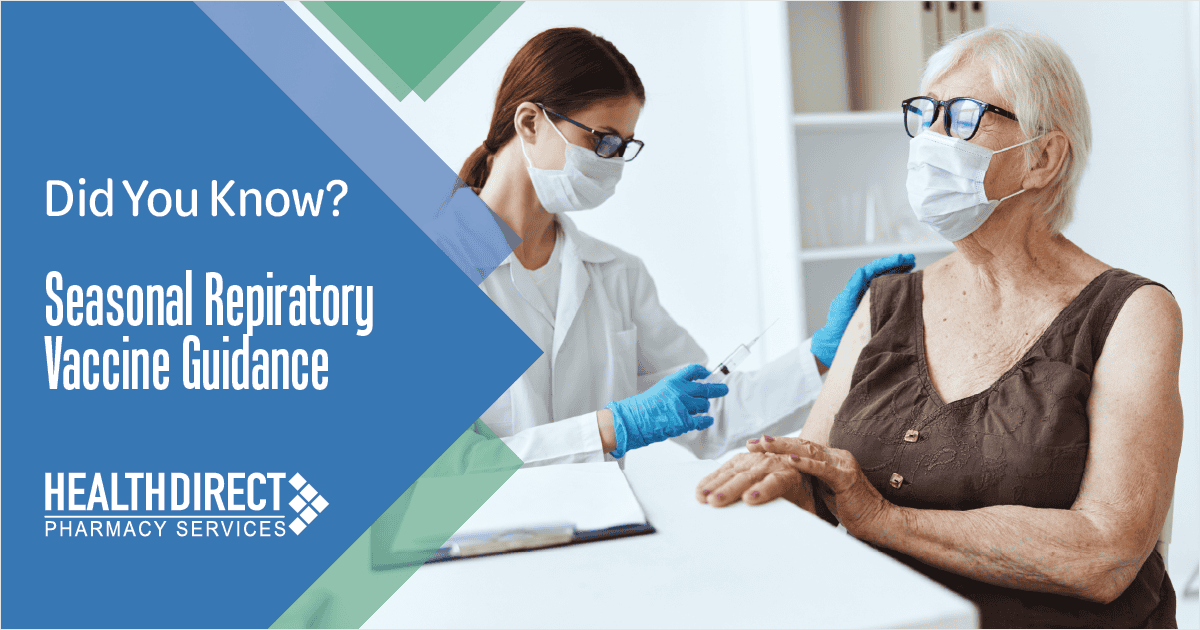
Circulating respiratory viruses such as COVID-19, influenza (flu) and respiratory syncytial virus (RSV) are more common in fall and winter, and can lead to significant illness and disease in the community care setting. Vaccines remain the safest way to build immunity to these viruses and reduce their impact.
Older adults, young children and people with certain underlying medical conditions are at the highest risk of getting sick or having severe illness from these viruses. As with every year, the CDC’s guidance for seasonal respiratory vaccine administration updates with new formulation approvals from the FDA. The following sections will cover what you need to know on this year’s vaccine updates, focusing on flu and COVID-19 vaccines. For RSV Vaccine guidance, see our DYK article from August, 2025.
| Immunizations to Protect Against Flu, COVID-19 and RSV | |||
|---|---|---|---|
| Vaccine Type | FLU | COVID-19 | RSV |
| Who should receive these vaccines? | CDC recommends everyone six months and older, with rare exceptions, to get an updated flu vaccine annually. People 65 and older should get a high-dose, recombinant or adjuvanted flu vaccine, if available. | FDA Approval is limited to individuals aged 65 and older and individuals under 65 with at least one underlying medical condition that increases their risk of severe disease. | CDC recommends a single dose of any FDA-licensed RSV vaccine for all adults ages 75 and older and adults ages 50–74 at increased risk of severe RSV due to community setting or underlying risk factors. |
| What are the benefits of vaccination? | Flu vaccines reduce the risk of flu illness, severe illness, hospitalization, and death. | COVID-19 vaccines are effective at protecting people from serious illness, hospitalization, and death from COVID-19; studies are also demonstrating a reduction in the risk of developing long COVID symptoms. | Vaccination against RSV can help prevent severe RSV-related illness, hospitalization, and death. |
*ask your HealthDirect Pharmacy representative about specific vaccine availability, administering vaccines simultaneously and vaccine supply solutions to keep your patients and residents up to date throughout respiratory illness season.
2025-2026 Available Vaccines in the U.S. Market
An individual’s medical record and immunization history should be compared to the current CDC Recommended Vaccination Schedule to determine which vaccine(s) are appropriate for the individual at time of encounter or consideration for vaccination.
- Child and Adolescent Immunization Schedule by Age
- Adult Immunization Schedule by Age
Influenza (Flu) Vaccine Updates 2025-2026
As in previous seasons, the CDC recommends that all individuals 6 months and older get an annual flu vaccine, with rare exceptions.
All flu vaccines for the 2025-2026 season are trivalent, covering two influenza A strains and one influenza B strain. This is a change from previous years, which have featured quadrivalent vaccines.
- Trivalent flu vaccines are formulated to protect against three main groups of circulating seasonal influenza Type A and B viruses: an A (H1N1) virus, an A (H3N2) virus, and a B/Victoria lineage virus.
Expanded product and administration options
- FluMist for self-administration: The FDA has approved the nasal spray flu vaccine, FluMist, for self-administration (ages 18–49) or caregiver administration (ages 2–17).
- Expanded Flublok approval: The recombinant influenza vaccine, Flublok, is now approved for individuals aged 9 and older, expanding its previous approval for those 18 and older.
- Thimerosal-Free: For the 2025-2026 flu season, CDC recommends seasonal flu vaccination with single-dose formulations that are free of thimerosal as a preservative for children, pregnant women, and adults.
- Adults 65 Years and Older: ACIP recommends that adults aged ≥65 years preferentially receive any one of the following:
- High-dose inactivated influenza vaccine (HD-IIV3, Fluzone High-Dose),
- Recombinant influenza vaccine (RIV3, Flublok), or
- Adjuvanted inactivated influenza vaccine (aIIV3, Fluad).
- If none of these three vaccines is available at a vaccination opportunity, then any other age-appropriate influenza vaccine should be used.
- Data support greater potential benefit of high-dose inactivated, adjuvanted inactivated, or recombinant vaccines relative to standard-dose unadjuvanted IIVs in this age group, with the most data available for high-dose vaccine (HD-IIV3)
- Timing of vaccination: While most people are advised to get vaccinated in September or October, specific groups have additional considerations.
- Children needing two doses should get their first dose as soon as possible, including in July or August, to allow time for the second dose.
- Pregnant women in their third trimester can also consider vaccination in July or August.
For additional information on flu vaccines for the 2025-2026 influenza season, see the ACIP / CDC recommendation summary page available at:
COVID-19 Vaccine Approvals & Formulations 2025-2026
On Aug 27, the Food and Drug Administration (FDA) authorized new COVID-19 vaccines from Moderna, Pfizer, and Novavax for 2025-2026 but significantly limited their use compared to previous years.
All vaccines are monovalent and target the LP.8.1 sublineage of the JN.1 Omicron variant.
ACIP & CDC have yet to endorse and publish their recommendations on these vaccines, anticipated for mid-late September. The section below explores what information is currently available following FDA approval. Unlike previous approvals, the new vaccines are not broadly recommended for all individuals aged 6 months and older. They are approved for:
- All adults 65 years and older.
- Individuals younger than 65 with at least one underlying medical condition (excluding pregnancy) that puts them at high risk for severe COVID-19 disease.
| Approved 2025-2026 COVID-19 Vaccine Products | |||
|---|---|---|---|
| Vaccine Name | Type | Approved Age Groups | Dose / Presentation |
| SPIKEVAX (2025-2026), Moderna | mRNA | FDA Approved ≥ 65 Years and individuals 6 months – 64 years with underlying medical condition | 0.5 mL/50 µg; PFS (12 years and older) 0.25 ml/25 µg; PFS (6 months – 11 years) |
| mNEXSPIKE (2025-2026), Moderna | FDA Approved ≥ 65 Years and individuals 12 years – 64 years with underlying medical condition | 0.2 mL/10 µg; PFS | |
| COMIRNATY (2025-2026), Pfizer-BioNTech | FDA Approved ≥ 65 Years and individuals 5 years – 64 years with underlying medical condition | 0.3 ml/30 µg; PFS (12 years and older) 0.3 ml/10 µg; PFS (5 years – 11 years) | |
| NUVAXOVID (2025-2026), Novavax | Protein Subunit | FDA Approved ≥ 65 Years and individuals 12 years – 64 years with underlying medical condition | 0.5 mL/5 µg (rS) – 50 µg Matrix-M adjuvant, PFS |
On qualifying risk factors
According to the CDC, age remains the strongest risk factor for severe COVID-19 outcomes. An updated list of high-risk underlying medical conditions (cardiovascular or lung disease, diabetes, obesity, etc.), along with their associated evidence, is provided at the CDC web address below:
For additional information from the CDC on COVID-19 vaccine use in the United States, see their provider recommendation page at the web address below, or scan the below QR code with your smartphone.

Prevention Tools for Respiratory Viruses
COVID-19, flu and RSV are considered respiratory viruses, as all three spread primarily by droplets produced when someone who is infected or carrying the virus coughs, sneezes or talks, releasing these droplets into the air. People can become sick if these droplets, infected mucus, or saliva enter their body through the eyes, nose or mouth. Review the following prevention techniques and tools to keep you and your community members healthy this Fall and Winter season.
Handwashing & Cleaning

Handwashing with soap removes most germs, including respiratory viruses,
from your hands. If soap and water are not available, using a hand sanitizer
with at least 60% alcohol can kill these germs. Using household cleaners that contain soap or detergent will remove germs and dirt on surfaces. Daily sanitizing may not be necessary if surfaces and objects are cleaned carefully after use. To sanitize a surface or object, use a weaker bleach solution or an EPA-registered sanitizing spray.
Masks
Their effectiveness against different viruses varies, but in general masks can help reduce the amount of germs you breathe in. You can also use masks to help protect others if you have a respiratory virus.
Air Quality Improvements
Viral particles in the air spread between people more readily indoors than outdoors. Air quality improvement practices, such as opening windows or using air filters, can reduce the amount of virus you are exposed to.
Physical Spacing

The closer you are to a greater number of people, the more likely you are to be exposed to respiratory virus. Generally, infectious droplets and particles are more concentrated closer to the person who is infected. Stay away from others who are sick if possible, and stay home if you are feeling unwell to prevent spreading illness to others.
Vaccines
Vaccines are the safest way to build immunity from a virus. Vaccines help the body learn how to defend itself from disease without the dangers of an infection. The immunity you gain from vaccination can reduce your risk of infection and becoming very sick if you do get infected.
References
- CDC. About Respiratory Illness. Available from https://www.cdc.gov/respiratory-viruses/about/index.html
- CDC. Adult Immunization Schedule by Age. Available from https://www.cdc.gov/vaccines/hcp/imz-schedules/adult-age.html
- CDC. Influenza (Flu) ACIP Recommendations Summary. Available from https://www.cdc.gov/flu/hcp/acip/
- CDC. Use of COVID-19 Vaccines in the United States. Available from https://www.cdc.gov/vaccines/covid-19/clinicalconsiderations/
covid-19-vaccines-us.html - CDC. RSV Vaccines for Older Adults. Available from https://www.cdc.gov/rsv/vaccines/older-adults.html